
If you've bounced between doctors for headaches, dizziness, neck tension or double vision with no clear answer, your eyes may be the culprit. When the two eyes are even slightly misaligned, your brain works overtime to fuse the images, and that constant strain shows up as very real symptoms. The fix is often surprisingly elegant: customized prism.
Symptoms of binocular vision dysfunction
- Recurring headaches and a heavy, strained feeling around the eyes
- Double or overlapping vision, especially when tired
- Dizziness, lightheadedness or motion discomfort
- Trouble reading, words swim, you lose your place, or you re-read lines
- Neck and shoulder tension from unconsciously tilting your head to compensate
Measured carefully, corrected gently
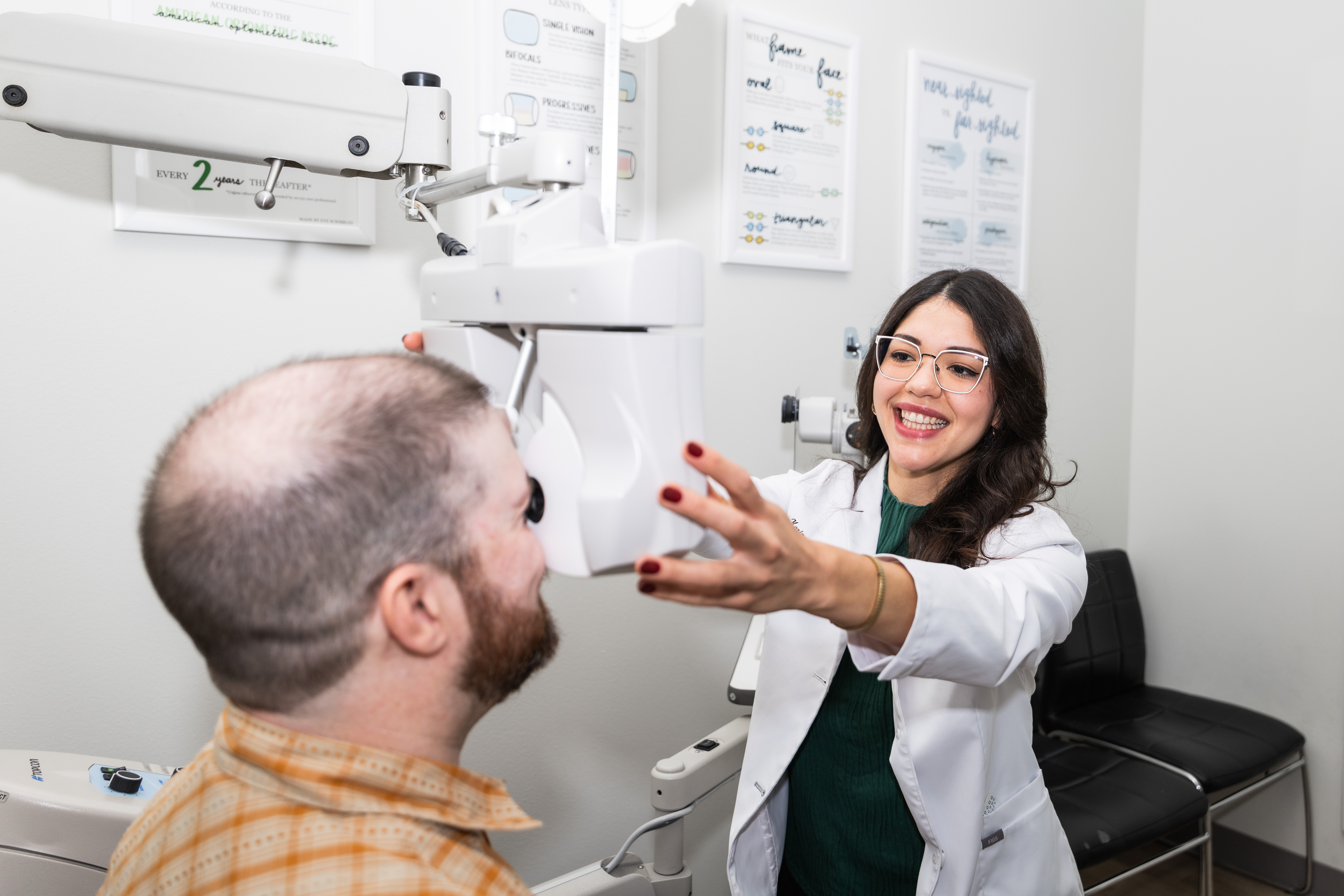
We use detailed binocular-vision testing to quantify the misalignment, then design lenses with the precise prism your eyes need. Many patients feel relief quickly once they're wearing the right correction. When the underlying skills need strengthening too, we'll pair lenses with vision therapy.
Long days on screens can amplify these symptoms, ask about anti-fatigue lenses as part of your solution.
Frequently asked questions
What is binocular vision dysfunction (BVD)?
BVD is a subtle misalignment between your eyes that forces your brain to strain to keep images aligned. That strain causes headaches, eye fatigue, dizziness and sometimes double vision.
How does prism help?
Prism bends light so each eye receives an image that lines up more easily, relieving the strain. Even small, precisely measured amounts can make a big difference in comfort.
Could this be why I get headaches at the computer?
Often, yes. Screen work demands sustained eye teaming, which exposes binocular vision problems. A binocular-vision assessment can tell us if misalignment is driving your symptoms.
Do you offer Neurolens?
Yes, we're a Neurolens provider. Neurolens is one brand of contoured prism lens, so if you've worn it before and need another pair, we can take care of you. We measure your alignment carefully either way and prescribe the customized prism solution that fits you best.